Showing posts with label desmos. Show all posts

Saturday, December 31, 2016

Half and Half: Managing Technology Use During Math Assessments


I'm just saying....this is new for me.  I have tried it once and would love some feedback on this idea.  

Splitting up the time a student is able to use technology on an assessment is not new.  You have seen it before where you give the first part of the assessment as "No-Technology" or "No Calculator" and the second part of the assessment as "Technology Allowed".   So this idea of giving the whole assessment at once and then splitting up the time half and half for "No Technology" and "Technology Allowed" is new for me.  It accomplished a few goals that I had for it.  Let me tell you how I worked it and then you can give me some feedback on what you think.

1.  Give the whole assessment to the students at the beginning of the class.  (You are not giving a part of the test to be no-technology and part of the test to be technology allowed)  
2.  Do not allow technology for the first half of the assessment.  
3.  Then allow the students to take out their technology to finish their assessment.  

Here are the positives.
1.  Students are usually looking at a problem twice.  
2.  Students are making predictions about the problems without technology and then confirming their predictions with technology.
3.  It affirms the use of mental math.
4.  It forced students to make a plan instead of just guessing with technology.

Negatives
1.  It takes away a really useful mathematical tool for part of the assessment.
2.  Students are a fearful to be without their technology
3.  The traditional problem solving approach is thwarted by not having all the math tools available.

Please give your thoughts and ideas in the comment section.

Saturday, February 28, 2015

Sometimes UN-Simplified is Better

To Simplify or Not to Simplify, that is a good question.


Recently, I have not been simplifying my work.  Let me explain.  We have been working on finding the equations of sine graphs in Precalculus.  I have found that when I type out my work in Desmos it doesn't automatically simplify it.  It still graphs it.  You can see the changes as you type them in.
This is really cool.  It leaves it so that the students can think about how the numbers came to be.  It is almost formula like.   See below.
 

Then, I asked my students to simplify the equation so that we can gain meaning out of the numbers.


Here is the project we just finished with if you are interested in taking a look. It is a project where we look at the vertical height of a person on a swing.  There is data involved and then we have to find the correct sine wave.   http://tinyurl.com/swingdesmos


Here is another place that I see non-simplification as a perfect fit.  In linear equations using slope. You can see here it fits right into the slope formula.  This also shows equivalencies of linear equations.   So if you make a mistake on one simplification step, you will see it right away because it will not match up with the first one.

Actually, I think that when we show our steps in this way we are "digitally showing our work."  Hope you can give it a try.

Best,
Dave


Sunday, October 5, 2014

Shifting to the use of Desmos and Geogebra Online Graphing Calculators


Wow.  This is fun.  I can't believe how easy it is to put math into our student's hands.  It is fast too. With a simple url link I have given my students many activities in seconds that takes them DIRECTLY to the concept.  This year I have really shifted my thinking away from the hand-held graphing calculator to the online calculators Desmos and Geogebra.  I use both for different purposes.  This post is a little about my journey this year.

For my day to day work, I have my students take out their smart-phones, or their iPads, or their school administered tablets and use Desmos free online graphing calculator.  For class activities, I often use Geogebratube.  This is easy way to challenge students with a math "scenario" online.


DESMOS EXAMPLE
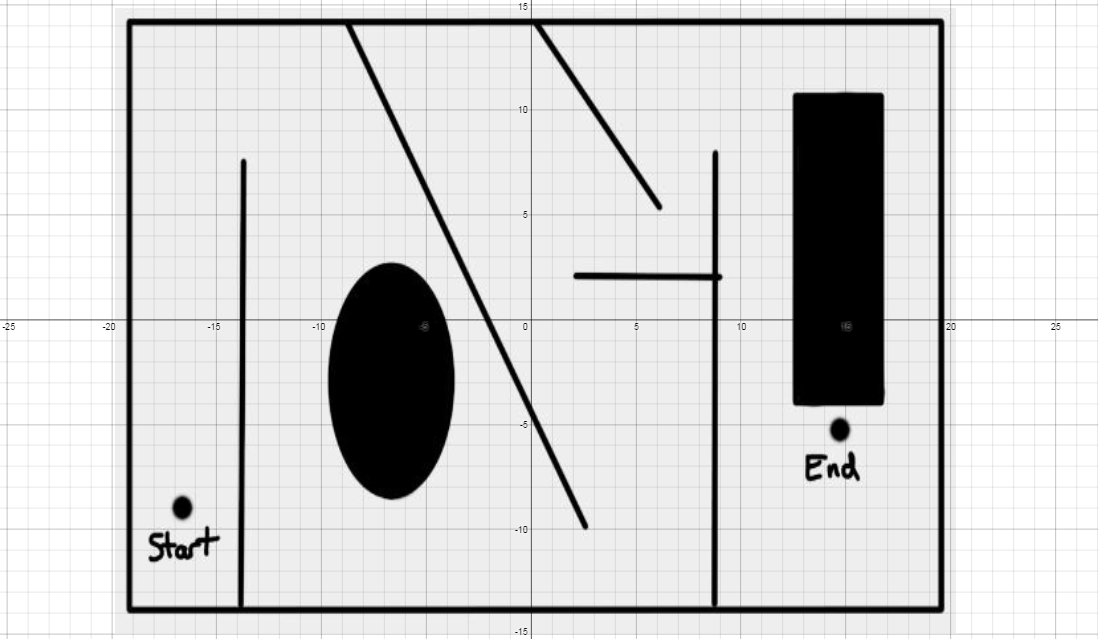
This week we were reviewing quadratics and I gave this "challenge" to my classes.  They had to navigate a MAZE with lines and parabolas.  Here is the actual activity that I gave them. http://tinyurl.com/sladkey218    Notice it is an easy to use to type in link.  (This is called a url alias and I use the free website called http://tinyurl.com to set this up)   I  also made a short video for help clues too.  Not everyone needed it.  http://tinyurl.com/sladkey219 
Here are a couple of comments my students have made about Desmos.  One was how he liked Desmos because the he could see both the graph and the equation at the same time.  He didn't have to go back and forth from the equation to the image.  Another student said they like the fact that they could find the graph so easily.  You can just use your fingers to pinch the screen and you can locate the graph.  Whereas while using a handheld graphing calculator you have to go back and forth from window to graph, to finally get the right graph screen.
This is how one student solved it.  There is so much math here.  The students really talk the talk too.


One video that really inspired my use of Desmos was by @bobloch on twitter he shared this demonstration on inequalities.  Check this out.  

GEOGEBRA EXAMPLE
I have always had a hard time explaining increasing and decreasing.  This turtle Geogebra activity really helped my students visualize what increasing and decreasing is and how it is represented.  http://geogebratube.com/student/m149285

You can see that there is a ton of material that can be used with Desmos and Geogebra.  Go and explore.  Let me know how it goes.  My twitter name is @dsladkey.  I'd love to hear from you.

Best,
Dave

Thursday, June 5, 2014

10 Reasons Why I think the TI-84 is on the way OUT!


Yesterday a colleague told me she overheard some students talking about how they never used their TI-84 at home.  She pursued the discussion and they said that they use DESMOS the online calculator all the time at home.   I think the use of it will go away slowly.  But it will happen.

The TI-84 (or TI-83) has been a fixture in my classes for many many years.  It has been a requirement on my syllabus.  It is something that I would daily ask my students to take out and work with.  I can't count the number of tutorials I've made to help use the TI-84.  It has been a go-to device for CONCEPTUAL learning.  But things are changing.

My Prediction.  Our school will not be requiring the TI-84 in the school year 2015-2016.  I have no authority to make that call.  I'm just making a prediction.  Our school goes 1 to 1 that year.  In my opinion, the days of every student having a TI-84 are going away.  Why?  Because other things are passing it up. And the thing that is passing it up is NOT another Graphing Calculator.  It is the Internet with web based interactions and  apps.

-

10 Reasons why I think the  TI-84 will NOT be required at our school in 15-16 
1.  Touch Screen
Students are getting frustrated with the TI-84 because it doesn't offer a touch screen.  The touch screen on a SMART-Phone or a tablet helps with finding the right window, editing data, sliders, and a bunch of other cool things. Also, the mouse is even better than the awkward navigation system of the TI-84.   I have tried to physically touch the TI-84 screen many times.  That's embarrassing.

2.   Ease of Use
As technology gets easier and easier to use.  The TI-84 seems to be more and more confusing to use.

3.  Size of Screen
A computer screen is a lot bigger than a TI-84 screen.  And a SMART-Phone screen is equivalent to a TI-84 screen.

4.  THE COST!
Why should we ask our students to pay $100 if our students will have constant access to a district owned device?  (i.e. tablet, Surface or Chrome book)  EVERYTHING that a TI-84 can do, a district owned device can do.

5.  1 to 1
Our district will likely go 1 to 1 in the 2015-16 school year. Every student will have a district owned device like a tablet at that time.  It doesn't make sense to have both devices.

6.  Data Exchange
The TI-84 system of exchanging data is old and outdated.  Basically it is useless.  For me to get something onto my student's calculator is nightmarish.  (It used to be really cool)  But, because the transfer of data is so easy with phones, and computers, and  tablets, that the technology of the TI-84 is really getting in the way of collaboration.  Remember, it used to be so cool to give your students a program or some data via the cord that goes between the calculators.  There is way too much teaching time wasted on account of this.  The students know a lot of ways to get information to each other that does not require a cord.

7.  Finding the Right Window
I have forever said that finding the right window is a great math skill on the TI-84.  However, I think I have been bypassed with the love of this skill.  The ease of a computer or tablet to get the right screen is far superior to the TI-84.

8.  Animations/Sliders
Sliders offer a hands on approach to math.  It encourages participation with the activity, with low risk high reward outcomes.

9.  Apps and Programs
The Internet math based apps are gaining momentum.  It's getting easier and easier to use math notation on the Internet.

10. Internet Based Math 
Desmos, Geogebra, LaTeX, online calculators etc.  This is just the beginning.  

Standardized Tests are the problem. I don't know what will happen with these.  The TI-84 has been a fixture for an acceptable device on the standardized tests for a long time.  With the PARCC online testing, this might be changing too.

TI-84 may you Rest In Peace.  It is time to move on.

Wednesday, May 28, 2014

Graphing Polar Equations with Desmos (online graphing calculator) and Padlet (online bulletin board)

This was easy.
We had just covered polar equations in precalculus. I then told each student they should make a cool design using 10 or less equations. Wow. They really loved it. They explored well beyond what we covered in class.

1. Log into desmos.com and either sign in or sign up.
2. Make a desmos polar graph using 10 or less equations.  Use r= equations and use theta as your variable. Also you can use a polar background if you like. www.desmos.com
3.  They should save their graph in desmos. (you can only do this if you are logged in)  Then click on share which gives you a link. Save that link.
3.  Then they had to log into the padlet.com site URL that I gave them. Here it is: http://padlet.com/dsladkey/6kdefazyz9wp  They double click anywhere on the screen to make a post. I had them put their name and then put the desmos link right in the post. www.padlet.com   I have put a picture of the padlet site.

Give it a try and let me know how it goes.
Dave


Friday, February 21, 2014

Making a Face with DESMOS.com

If you haven't worked with desmos yet, you are missing out.  It is so easy and intuitive.  The students will catch on so easily.  Here is the in class assignment I gave today.  This was a precalculus class.  You can easily adjust this for any high school math class.

This was a student's work was done in 15 minutes of class time.  There is so much math here too.  
  

Sign up with desmos.com and make a face using the free online calculator.

Your face must include these things:
1.  A circle or ellipse
2.  A line
3.  A sin or cos wave
4.  A slider
5.  A parabola
Now post your face in a link to this website:  http://tinyurl.com/nchsprecalculus6

Please go to this site to see all the wonderful examples that my students made.  They will make you smile.

Here are some questions that I had today.
How do you make the sin wave go vertical instead of sideways?
How do you move the circle from the center?
How do you restrict the x values so they don't always show?
How do you make a circle bigger?
How do I make this parabola wider?

Take 15 minutes and make a face today and you will see how much math DESMOS has.  Now this was a fun class.  The students were really active in their pursuit of the math topics. Please try this and let me know how it goes.
Dave


Wednesday, April 24, 2013

Desmos Online Calculator with SLIDERS


I love the Desmos Online Calculator. 
 It is easy to use.
Easy to Share.
You can Embed it. 
You can make sliders with it.
Give it a try.
I

Desmo Website
Library of Sliders

Here is a cool site full of examples from a class using Desmos
http://padlet.com/wall/rvkica26qi
Here is one of those examples.  Click on it to make it interactive.